
There’s a particular kind of exhaustion that doesn’t come from working too hard. It comes from being agreeable for too long — from saying yes when everything inside you was saying no, from smiling through conversations that hollowed you out, from waiting for someone to finally notice how much you give and give it back.
If you recognise that exhaustion, you already know the hardest part: the moment you finally try to stop, you don’t feel free. You feel guilty.
The Lie You Were Taught Before You Could Question It
Most women who struggle with people-pleasing weren’t born accommodating. They were trained. Somewhere early, the message landed: to be loved, you had to do something. Be kind. Be good. Be always available. Don’t disturb. Don’t take up too much room.
So you adapted. You said yes even when you were dying inside. You smiled to avoid displeasing anyone. You accepted crumbs and called them love. You erased yourself, quietly certain that one day someone would notice the effort and return everything you’d given.
That day never arrived. And here’s the uncomfortable reason why: people who feed on your limitless availability have no interest in reciprocating. They want you exactly as you are — useful, silent, expendable.
The cruellest lie in the whole arrangement is that love must be earned. It’s false. Love isn’t won through toil. Love is given freely, or it isn’t love at all.
Guilt Is Not A Moral Compass
This is the part almost nobody tells you. When you set your first real boundary, guilt shows up instantly — a knot in the stomach, a racing heart, a voice insisting you’re being selfish.
That guilt is not evidence that you’ve done something wrong. It’s evidence that you’re breaking a pattern.
Guilt is a reflex conditioned into you by years of being told your needs mattered less than everyone else’s. It’s a phantom that haunts newly broken chains. And notice when it arrives: not when you harm someone, but at the precise moment you stop harming yourself.
Guilt holds you back more than fear does. It convinces you that your wellbeing will destroy other people, that your no will break bonds, that your truth will be unbearable to hear. So you keep enduring, keep pretending, keep giving up ground.
But look closely at that guilt. It isn’t yours. It was taught to you, and it was used as a weapon to keep you manageable.
So when it comes, don’t reverse course. Walk through it. There is usually nothing behind it but room to breathe.
Your “No” Doesn’t Destroy Love — It Reveals It
The fear underneath every unspoken no is always the same: if I refuse, I’ll lose them.
Sometimes you will. And that loss is not the tragedy it appears to be.
A no doesn’t destroy anyone who genuinely loves you. It only severs ties built on your unlimited availability. Whoever stays beside you after a no sees you as a person, not a tool.
If someone becomes angry or reaches for the word selfish the moment you protect yourself, they aren’t defending the relationship. They’re defending their access to you. That isn’t love. That’s control.
Love that makes you feel like too much, that quiets you, that asks you to shrink, isn’t love at all. Those who truly love you won’t ask you to disappear. They want you alive, whole, and luminous.
You Are Not Asking For Too Much
You’ve probably been called dramatic. Intense. Difficult. Demanding. Each label arrived the moment you expressed a need.
But consider a different explanation: you’re not asking for too much — you’ve been asking for far too little.
Respect. Presence. Attention. Care. These aren’t luxuries or special privileges. They’re the baseline of any healthy relationship. If they feel excessive to you, it’s only because you grew so accustomed to receiving very little that emptiness started to feel like enough.
You’re not difficult. You’re tired of sacrificing yourself. And when someone tells you you’re “too much”, it’s usually because your enough has exposed their habit of overstepping.
What Actually Changes When You Choose Yourself
It won’t feel triumphant at first. Your first nos will come out with a trembling voice. You’ll feel guilty for taking a single hour for yourself. Some people will drift away — and yes, that will hurt.
But that’s not loss. It’s natural selection. Those who truly love you won’t ask you to erase yourself. If someone walks away because you’ve chosen yourself, it wasn’t love — it was convenience.
Then something quieter happens. You breathe. You notice how much lighter you feel without the cage. You’re less exhausted, less angry, less hollow. You discover that your voice has volume, your desires have dignity, and your body isn’t a battleground but a home.
Eventually, the fear of disappointing people stops working as a warning and starts working as a compass. Whenever you feel it, you’re usually walking in exactly the right direction — the one leading towards your freedom.
Start Where It Stings
You don’t need a five-year plan. You need one honest refusal.
Choose one request this week that you’d normally absorb, and answer with a complete sentence: “I can’t do that.” No explanation, no alibi, no softening clause. A boundary isn’t a court case. Your word is enough, and every extra justification is an invitation for someone to debate you out of your own decision.
Stop asking permission to exist. You are here, and that is authorisation enough.
If you’re ready to stop enduring and start living, First You, Then the Rest: 120 Sessions of Uncomfortable Truths to Stop Being Walked Over, Put Yourself First and Finally Hold Your Head High offers 120 short, confronting sessions across four movements: choosing yourself without guilt, learning to say no without feeling wrong, letting go of toxic people, and living with uncomfortable honesty. Read them in order, or open to whatever stings most.
That’s usually the right page.
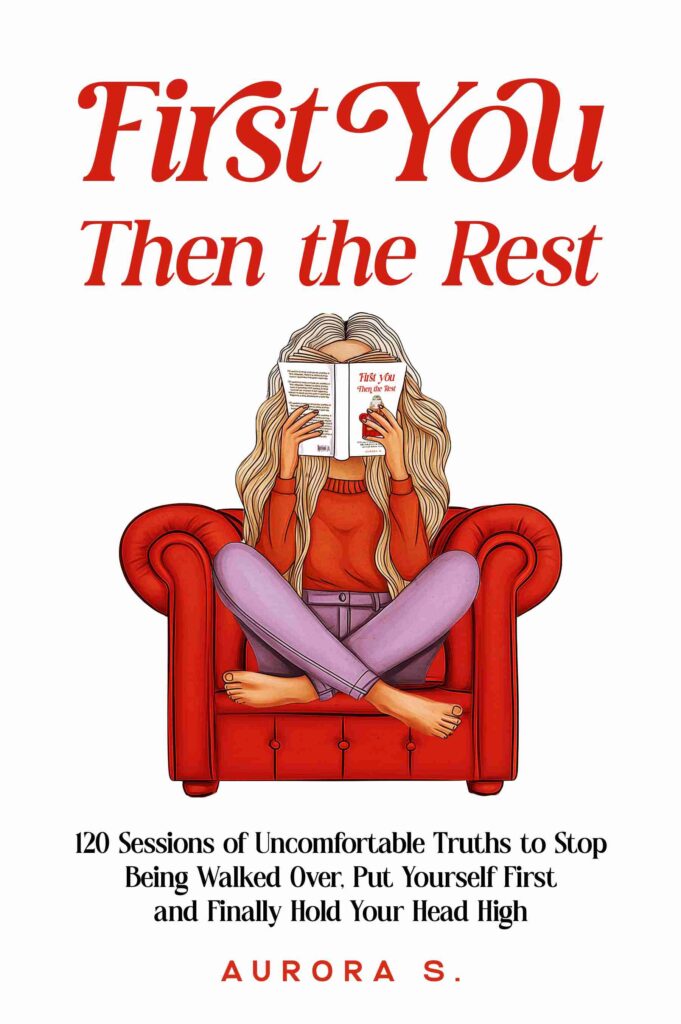
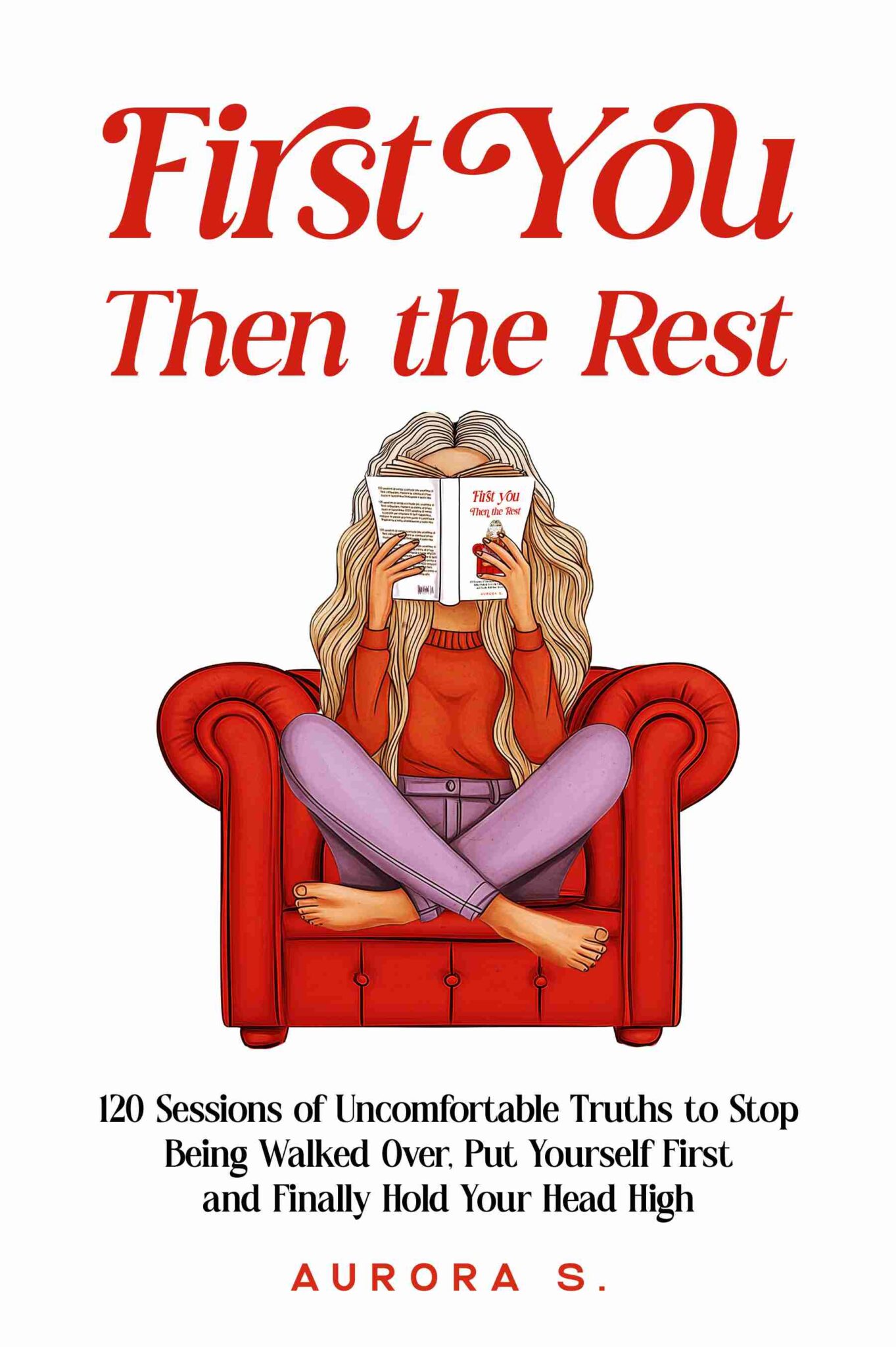
Aurora S. is a motivational coach and author who helps women overcome people-pleasing, reclaim their voice, and build stronger self-worth. Her work focuses on setting boundaries, saying no without guilt, and choosing yourself without apology. She is the author of First You, Then the Rest: 120 Sessions of Uncomfortable Truths to Stop Being Walked Over, Put Yourself First and Finally Hold Your Head High.






Leave a Reply