
There’s a moment most men hit — usually somewhere between thirty and forty — where the life they built starts to feel like a costume. Good job. Nice apartment. Weekend drinks with the boys. Everything looks fine from the outside. But inside, something’s rotting.
I know because I lived it.
I spent years building a data center business from nothing, eventually selling it and moving across four countries — the UK, China, Bali, and Dubai. On paper, I was winning. In reality, I was numbing myself with alcohol, coasting on momentum, and avoiding the one question that actually matters: What am I building that will outlast me?
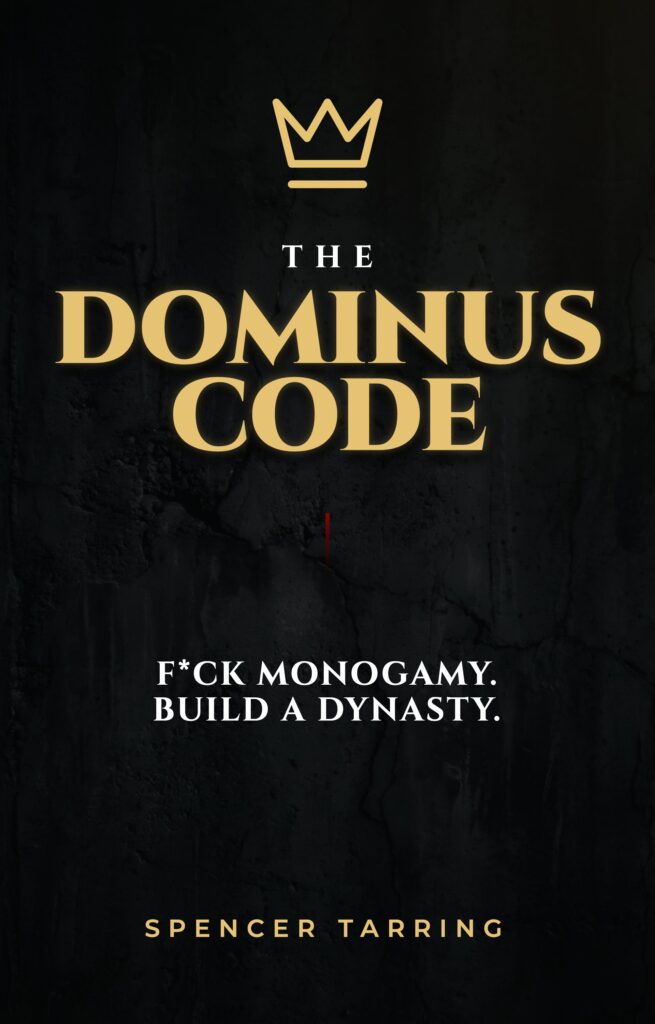
That question — and two decades of brutally honest notes I kept for myself — eventually became The Dominus Code: Fuck Monogamy, Build a Dynasty.
Why Most Men’s Self-Improvement Advice Falls Short
Here’s the problem with the modern masculinity conversation: it’s been sanitised to the point of uselessness. You’ve got one camp telling men to shut up and be soft. Another camp selling testosterone supplements and pickup lines. Neither one gives you a framework for actually building something with your life.
The Dominus Code isn’t a self-help book. I didn’t write it to make anyone feel good. I wrote it because I spent twenty years learning lessons the expensive way — through failed relationships, business disasters, health scares, and the kind of loneliness that comes from being surrounded by people who don’t actually know you — and I wanted those lessons to exist somewhere outside my own skull.
The book is built around a concept I call The Prime Directive: strengthen your bloodline. Not in some eugenics way — in the way that every decision you make either builds your legacy or erodes it. Every meal. Every relationship. Every hour you spend scrolling instead of creating. It all compounds.
What “Dominus” Actually Means
People see the title and assume the worst. Fair enough — it’s designed to provoke. But Dominus doesn’t mean overlord or tyrant. It’s Latin. It means the leader of the household. The protector. The one who bleeds first so others don’t have to.
That distinction matters. Modern masculinity has become obsessed with dominance as performance — chest-puffing, status games, Instagram posturing. The Dominus Code is about something quieter and far harder: sovereignty over yourself.
Can you sit with discomfort without reaching for a drink? Can you hold a forty-hour fast when your body is screaming at you to eat? Can you step into a 4°C cold plunge at six in the morning when every nerve in your body says no?
I do all three. Weekly. Not because I’m tough — because I spent most of my twenties and thirties proving I wasn’t, and I got sick of the man I saw in the mirror.
Structure Over Chaos, Purpose Over Pleasure
On December 31st, 2020, I had my last drink. No fanfare, no twelve-step programme, no public declaration. I just stopped. Because I’d finally understood something that took me two decades to learn: pleasure is the enemy of purpose when it’s running the show.
That doesn’t mean life should be miserable. It means the default setting for most men — chasing comfort, avoiding hard conversations, choosing the easy path — is a slow death. The men I respect most aren’t the ones with the most money or the biggest platforms. They’re the ones who built something with intention. Who chose structure when chaos was easier? Who said no to the things that felt good in the moment because they were building something that would feel meaningful in a lifetime?
This is the backbone of the book. Every chapter comes back to a simple question: are you building a dynasty, or are you just getting through the week?
The Parts That Make People Uncomfortable
I’ll be honest — The Dominus Code has sections that will make some readers deeply uncomfortable. It includes explicit content. It challenges conventional relationship frameworks. It proposes structures that most of polite society would rather not discuss.
All of it is consensual. All of it is examined honestly. And none of it is included for shock value.
I included those chapters because building legacy means being honest about every part of how you live — not just the parts that look good on a blog post. The men who read this book and get the most from it are the ones willing to sit with that discomfort rather than dismiss it.
Who This Book Is Actually For
The Dominus Code isn’t for everyone. It’s not for men who want to be told they’re fine the way they are. It’s not for people looking for gentle affirmations or a seven-step morning routine.
It’s a masculinity book for the man who suspects he’s capable of far more than he’s currently delivering. The man who’s tired of the gap between who he is and who he knows he could be. The man who wants a framework — not a formula, but a framework — for building something that matters.
I wrote it in my voice because I don’t know how to write any other way. It’s direct. It’s personal. Some of it’s philosophical, some of it’s profane, and all of it came from nights sitting alone in hotel rooms in Shenzhen and villas in Bali, trying to figure out what the hell I was doing with my life.
Twenty years of notes. Four countries. One question: What does it actually take to build a legacy worth leaving behind?
The answer isn’t comfortable. But it’s honest.
And that’s more than most books in this space can say.
Spencer Tarring’s The Dominus Code is available now at thedominuscode.com.

Spencer Tarring is a former tech CEO, entrepreneur, and author of The Dominus Code: Fuck Monogamy, Build a Dynasty. After building and selling a data center business, Spencer lived and worked across four countries — the UK, China, Bali, and Dubai — collecting two decades of hard-won lessons on discipline, leadership, and legacy. A practitioner of 40-hour weekly fasts, cold water immersion, and radical self-accountability, Spencer wrote The Dominus Code from twenty years of personal journals and field notes. He currently lives in Dubai, where he continues to build businesses, mentor men, and refine the frameworks he writes about. He is unapologetically direct, occasionally profane, and allergic to self-help clichés.







Leave a Reply