
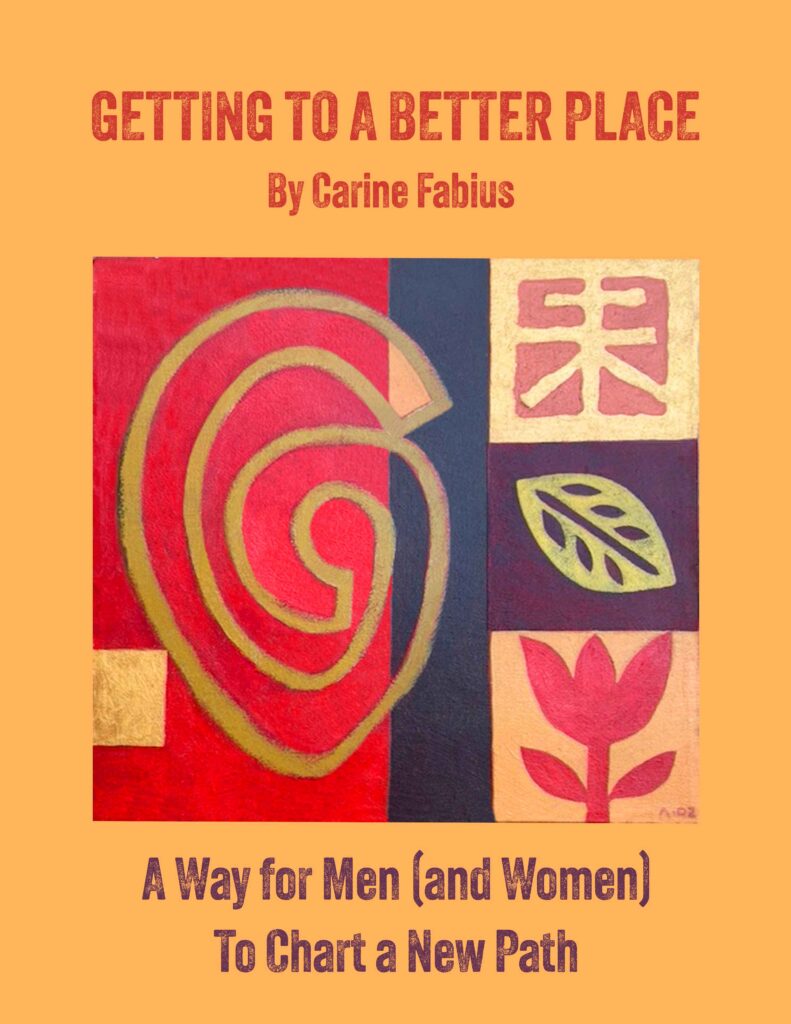
In Getting To A Better Place, Carine Fabius explores masculinity, power, and love in a changing world. This book offers practical insights for men seeking purpose, equality, and emotional clarity in modern society.
Raise your hand if you’ve heard about the identity crisis now proliferating among young men. Those experiencing intense difficulty in the areas of self-worth, stalling careers, relationships with women, economic viability, and loneliness tend to be in the 18-30 age range, but I think it extends to the age of 40.
So, I felt compelled to pen Getting to a Better Place because I have some very specific suggestions, especially for younger men, who would like to create a better world for themselves than the one they are inheriting.
The Patriarchal Mindset: Understanding The System We Inherited
Patriarchy means control by men of a disproportionately large share of power.
It is very likely that most of the men experiencing the above-listed issues don’t feel like they have much power at all, so why bring this up? Because it’s hard to avoid the fact that men have been in charge for thousands of years, and here we are today at an inflection point that the patriarchal mindset helped to create. Some say that women are not blameless, which may be valid. But for the most part, men have been in charge of creating the policies that govern our lives, our society, and the world at large.
But this isn’t about blame, it’s about better. Men are not the problem. The problem is the disproportionate control men have on power, and that too many refuse to share power, even when it’s clear that the current system is failing everyone, including men themselves. I will spare you the laundry list of catastrophes currently plaguing us, starting with growing hostility between men and women, climate change, sex trafficking, and non-stop wars.
You (young male person) are not personally responsible for the world’s problems. You’re likely a good person who respects women and struggles to understand why so many resist equality. But patriarchal conditioning begins at birth, teaching boys that they are superior to girls. A reconfiguration of the patriarchal mindset is needed. We need to shake it up, turn it upside down, or throw it out the window altogether, and there are small, simple steps men can take to get there.
Raise your hand if you think change happens with incremental behavioral adjustments!
Redefining Power In Getting To A Better Place
I rank power right up there with the quest for money when it comes to the forces that drive human beings (love has its own chapter). It’s not that having power is a bad thing. It’s a damn good thing to have if you want to be a mover and shaker and create change. So, how do you get power?
One of the first questions to ask is what kind of power do you want? Power over others? Like a general in the military or a corporate CEO with power and influence over staff? The power that comes with wealth accumulation? Personal power? In which case, the famous phrase comes to mind: knowledge is power—the power to understand the world and your place in it (the best kind of power, in my opinion). Once you define the power you seek, the next question to ask yourself is why do you want that power? And once achieved, what will you do with it? Because if the goal is power for power’s sake, that’s a perfect example of the old patriarchal mindset at work; you sitting on your powerful throne all by yourself while others struggle because of your actions (think the 1%) is a scenario we’ve tried before, and look where it’s gotten us: right where we are today. A better question to ask is how this power can be used to improve not just my personal circumstances, but the larger world? If we want different outcomes, we have to ask different questions.
The Why is crucial. Being able to buy or build anything you want are terrible reason. Why? Anything you buy or build can be taken away or destroyed. But if you want power because it will bring you 1) pride in yourself, 2) joy, and 3) contentment, those goals are very easily attained without all the trappings of power. If you lead a conscious life, spread love instead of hate, and help others whenever possible, you’re already the most powerful person you can be. Acknowledge this reality. It’s a heady and inspiring place to start.
Love As A Practical Foundation
What does love have to do with changing the world or yourself? No, I’m not talking about clichéd notions of universal harmony, where love alone fixes everything. I want to talk about love on a practical level.
Having embarked on a spiritual path when I was 20, through meditation, I came to realize that love and the universal life force are one and the same. Through your breath, which is the basis of most meditations worldwide, you can experience the force that powers the wind, ocean, plants, and trees—and us. We need to experience that life force because it is the same as knowing love. Once we experience love (not a relationship with someone, that’s something else), not only do you love yourself (not the person you see in the mirror, but the true you), you come to understand that we are all fueled by the same energy. We are all the same! Once you have that realization, you will want to treat everyone like you would yourself, and that’s a beautiful place to start when you want to change the dynamic of your life. (If meditation is not your thing, there are other ways to access that love.)
Recognizing love in others leads to the understanding that men and women are equal. When men see women as equals, society transforms. Bonus: When men truly embrace gender equality, women will more easily fall in love with them!
Who Should Read Getting To A Better Place?
This book is particularly relevant for:
- Young men navigating identity and purpose
- Readers questioning traditional definitions of masculinity
- Anyone interested in healthier gender dynamics
- Individuals seeking practical philosophical guidance
Fabius blends personal stories with direct suggestions, often using romantic relationship scenarios to highlight broader societal patterns. The tone is reflective but clear — ideal for readers open to introspection and growth.
Final Thoughts
These are but a sampling of the many suggestions presented in my new book Getting to a Better Place—A Way for Men (and Women) to Chart a New Path. I do ascribe to the personal is political ethos; so, I often use personal romantic/relationship scenarios to frame common issues and offer clean suggestions on how to approach those issues in new ways. This simple guide helps to create better relationships with your women partners at home, and by extension, on the world stage.

Carine Fabius is a Haitian American author of seven fiction and non-fiction books. She is also the Co-Owner/Director of Galerie Lakaye, a 35-year-old contemporary ethnic gallery specializing in Haitian art. The gallery has been covered in Vanity Fair, the Los Angeles Times, and many other media outlets. Carine is involved in multiple creative endeavors, including running Lakaye Studio, which manufactures a line of henna body painting kits, and curating museum exhibits for Southern California venues—but she enjoys writing best. She wrote for HuffPost for 10 years. She lives in Hollywood, California, with her artist husband, Pascal Giacomini, and Lily, their cat.







Leave a Reply